“There are riches in the niches” is something I no longer believe in. Here’s how building a personal brand with multiple interests is actually helping me grow my business.
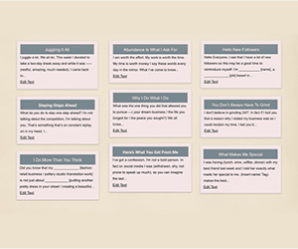
This week on Threads, my mind went on a roll with all kinds of thoughts and opinions.
My thumbs also acted accordingly.
On the platform I opined on how to take risks in your business.
I called on Anthropic’s Chief Research Officer to explain exactly how he sees humanity being extinguished by AI…
I wrote about aligning your to-do list with your quarterly plan, outlined plans for an upcoming Content Residency…
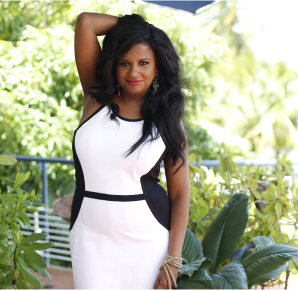
And showed I off a new outfit of the day.
That was all by Wednesday.
The old me would have thought: “Judette, stop. You’ll never build an audience writing about everything from AI to offers, small business, content systems and whatever else has your attention that day.”
That rationale had become ingrained.
I started my online business when the phrase “riches in the niches” was everywhere.
The advice was simple.
Pick a lane. Stay in it.
Write incessantly about that one topic.
Build authority.
Tap into a highly targeted customer base.
Charge premium prices for your specialised products and services.
Make money.
There was nothing inherently wrong with that.
Niche = riches.
Except there was a problem. I wasn’t a human being with one interest.
I had multiple passions, and in several of them I had built a body of expertise, years of practice and experiences I couldn’t wait to share.
Choosing one over the others felt like tossing several perfectly good babies out with the bathwater.
And I couldn’t do it.
But for a long time I wondered whether refusing to choose would cost me.
Would I struggle to find my people because they couldn’t immediately put me into a box?
Would an algorithm know what to do with someone who wrote about AI on Monday, business planning on Tuesday and clothes on Wednesday?
And, maybe the biggest question of all for someone running a business:
Could I actually make money without turning one interest into my entire identity?
The Single Story The Algorithm Rewards
Long before I worked in the digital world, I founded and ran a seven-figure communications agency.
I was the woman who could write the speech and handle the crisis.
I was known for creating award-winning campaigns and helping execute large-scale events.
I sat in the C-suite talking strategy, then worked with administrative teams to make sure that strategy actually got executed.
I’m grateful there was no algorithm hovering over my career back then.
I was allowed to pursue several different interests, get very good at a few of them, and then move on to learn some more.
I positioned myself so I could put all of those skills to work.
No one ever told me I needed to pick a lane.
So I didn’t. I probably wouldn’t have listened anyway.
And all of those experiences made me who I am today.
To insist that I choose only one would have flattened my curiosity.
It would have meant overlooking so much of the experience, learning and expertise that eventually became useful somewhere else.
I would have made one story my only story, so to speak.
The algorithm, however, wanted something different from me.
It wanted a story it could understand quickly, package and surface to people it thought wanted more of the same.
It was built to recognise patterns — what I talked about, who engaged, what they lingered on and what they ignored.
And so I learned to produce recognisable patterns too. To make my content, my work and eventually the business easier for those systems to classify.
And I get it.
In fact, I was so persuaded by the phrase “riches in the niches” when I moved online that, for the first time, I followed its lead.

Do You Really Have To Niche Down?
To be fair, the advice wasn’t bad.
Okay, it was solid.
I mean, there were obvious benefits to discarding my lifestyle category, my crisis PR background, my AI building skills and deep expertise in building ecosystems and focusing on one thing.
Niching down gave a small business clarity.
So in the early days, I made it all about marketing.
And yes, if you knew exactly who you were speaking to, it became way easier to understand what they needed, create products for them and write marketing that made them think, yes, this is for me.
Niching had another advantage.
Since my world was limited it was easier to understand.
I’m sure you may have seen this too.
You could become known as the person who solves one particular problem, you build authority around it and differentiate yourself from the hundreds of other businesses competing for the same customer.
And commercially, it’s a powerful formula.
A clearly defined audience makes it easier to sharpen your offers, price your expertise and spend your marketing dollars reaching people who are much more likely to buy.
So yes, there are riches in the niches.
I experienced some of those benefits myself.
Growth.
An audience of more than 30,000 on my main platform, Facebook.
Products that sold.
But I didn’t want to talk about marketing 24/7.
And after a while, I hated showing up online sharing knowledge around one single story/ topic.
As a business owner, it felt good to be cash rich, Creatively, I felt poorer for the choices I had made.
That was the tension.
I wanted to show up as a copywriter, a systems thinker, a storyteller, an automation + AI builder, an IRL host, a planner, a fashionista, an amateur interior designer, someone who can host a mean supper club.
I also didn’t want to throw away the clarity, authority and commercial benefits that came from being known for something.
Over time, I knew where my heart stood.
I didn’t want my business to require me to amputate every other part of myself just to stay understandable.
So my work became figuring out how to hold both.
And after years of getting a little lost, watching my metrics decline and trying to understand what a non-singular voice would mean, I began to find a way to balance my own rhythm with the algorithm’s version of what success online should look like.
How To Be Many Things At Once And Still Find Cohesion
One of the first things I did when I began thinking about how to build a personal brand with multiple interests was to find the thread running through all of mine.
My thinking focused on how I could be known not simply as the woman without a niche, but as a successful entrepreneur with several passions,
I want to pause here because I’m about to tell you about my personal journey, but I think the same work-through, with a few tweaks, can apply to you too…
…especially if you have diverse interests and absolutely refuse to pick a lane.
My first step was figuring out what my actual business pillars were.
Notice I did not begin by asking who I served, what my brand voice was or what my content pillars should be.
I knew those things already.
I’m decades into this rodeo.
What I needed was to see whether there was enough common ground for all the different parts of my business to stand on.
I came up with four areas.
1. My planning ecosystem
This included my digital planning product and three live planning experiences each year.
2. My AI and agentic work
This included Amy, my digital offer AI coach, as well as my work with founders with 2–5 employees, helping them build integrated AI systems that gave them back the capacity to spend more time on revenue-generating work.
3. My Residencies and Supper Clubs
These were the in-person experiences I was beginning to host for founders at my home, which I had turned into a tiny community space called The Commons.
4. My coaching and systems work
This covered the work I had done for years around systems building, email, funnels, ads, automation and the machinery that helps a small business actually run.
Then I added a fifth layer.
It wasn’t a business pillar at all.
It was my world.
Fashion. Interiors. Café life. Books. The Commons. Food. People. Trinidad. Caribbean life. The things I notice.
And the decision I made here was important.
I really wanted my personality to seep through into social media and all the original content I was creating for my newsletter, blog and elsewhere.
Just by working through these two areas — my business pillars and my timelines — I began to see me again.
I didn’t have to be reduced to a single story.
But there was another part of this exercise that was equally important.
Naming the pillars was one thing.
I also had to decide when each one would to be more visible than the next.
Every part of my business did not need equal airtime every week.
My take on planning could become louder around a launch or a new quarter.
The Residency could come forward as an event approached.
AI could remain part of the ongoing conversation because it was becoming increasingly central to my work.
And the fifth layer — my world — could remain present throughout all of it.
That started giving me something I had been missing: a content rhythm.
My audience could see the range of my interests without feeling as though I had woken up every morning and spun a wheel to decide what I would talk about.
Some interests would have their season.
Others would stay quietly in the background through every season.
And running through all of them would be the life, opinions, humour, places and experiences that made the work recognisably mine.
Let me tell you, the work I did to get here was so intentional.
>>> Join my weekly newsletter for a behind-the-scenes, front-row look at what it takes to build a successful business—online and off. CLICK  HERE and BELOW <<<
Finding The Through Line
It also opened my eyes to something else.
Having several business pillars could still feel like four different businesses — and eventually become four different businesses — if there was nothing connecting them.
So my second step was to find the through line.
And this time, I needed to connect that through line not only to what interested me, but to the people I wanted all of this work to serve.
My people were founders over 40, particularly women of colour who did not see age and ambition as mutually exclusive.
When I looked at who I served and what I brought to the table, I knew I needed an umbrella statement.
Something that would act almost like a positioning statement without niching me down.
Something broad enough to hold all four areas of my work, but distinct enough that, over time, people could recognise the territory as mine.
Once again, this became a process.
Journalling. Mapping. Asking ChatGPT for keywords. Testing phrases. Throwing some out. Moving words around.
And repeatedly asking myself:
If someone saw this phrase in my copy, an ad, a blog post or something I wrote on social media, could it credibly represent any one of my business pillars?
If the answer was unmistakably yes, I had something.
Eventually I landed here:
How do we build a smarter, more intentional small business now?
I paid attention to every word.
Build mattered because that’s what my audience was doing.
Now gave the idea currency. We are building businesses in the middle of enormous shifts in technology, politics etc
Small business is my jam. That word had to be included.
And smarter and more intentional spoke directly to the systems, planning and thinking that ran through almost everything I was creating.
Suddenly Planning, The Residency, Coaching and AI didn’t feel like four unrelated businesses.
They were four different answers to the same larger question.
That was the cohesion I had been looking for.
And once I understood that, the content architecture underneath it became much clearer too.
My brain gave me authority: my ideas, observations, teaching, questions and points of view.
My work gave that authority a commercial home: my planning ecosystem, The Content Residency, Amy, The Commons and the other things I was building.
My world made the visual storytelling unmistakably mine: fashion, home, cafés, food, books, Trinidad and everyday life.
And I noticed that some of my strongest content happened when two, sometimes all three, overlapped.
An idea could begin in my brain, connect to something I was building and be told from a café in Trinidad.
There was no reason those things had to compete with each other.
I also came up with a sentence I could repeat often enough that people began to understand the territory I occupied:
Hi, I’m Judette. I’m obsessed with helping you build a smarter small business — one that’s planned with intention, shows up with a point of view, and puts AI and systems to work.
See the vision?
See how the pieces connect?
More importantly, see how I no longer have to reduce myself to one of them?
I can just be me: a business owner with multiple interests, someone who creates value, solves problems, creates solutions and helps other people do the same.
To Niche Or Not To Niche? This Has Been My Experience
Dan Koe has one of my favourite takes on the polymath and the polycreative.
He has a line I keep coming back to:
“You were told to pick a lane.”
What I like about his wider argument is that it questions why we became so comfortable with the idea that a serious working life had to be built around one professional identity.
That was never really how I worked before I came online.
When I ran my communications agency, nobody seemed particularly worried that I was doing too many things.
Neither was I.
I was simply putting everything I knew to work.
Then I came online and somehow became more cautious about that range.
I started thinking much harder about what people should know me for, what I should talk about, what belonged on the feed and what might confuse the audience.
Some of that discipline was useful.
Some of it made good business sense.
But I can also see now how easily I began editing myself down.
And I don’t want to do that anymore.
I want room for the work I already know well and the things I am only beginning to understand.
I want to follow an idea because I’m curious about it.
I want the things I read, notice, wear, build and experience to have some place in the work without having to justify every one of them as part of a niche.
That feels much closer to the way I lived and worked before the internet taught me to be so concerned with being known for one thing.
And maybe that is why this whole exercise has mattered so much to me.
I wasn’t only trying to fix my content.
I was trying to make the business fit the life I actually wanted to live.
And live well.